Is a Kitchen Island Worth It in a Small Kitchen?
A kitchen island can be worth it in a small kitchen if it adds useful work space without blocking your normal routes. Measure the island and the walking space around it first; choose a compact or movable option if a fixed island would make the room harder to use.
On this page (6 sections)
A kitchen island is worth it in a small kitchen when the added work surface or storage is useful and the island leaves clear routes around it. Measure the footprint and nearby clearances before you buy, then consider a compact or movable option if a permanent island would crowd the room.
The right choice depends on how you use the kitchen. A small island may give you space to prep, set down groceries, or keep everyday items close, but it can also interrupt movement if it sits between the sink, fridge, and cooking area.
Is a kitchen island worth it in a small kitchen?
It can be worth it if you gain a practical surface or storage without making the room difficult to move through. If the island blocks a doorway, appliance, or main path, the added counter space may not offset the daily inconvenience.
Start with what you need most. An island with shelves or drawers can keep supplies nearby, while a narrow top may be enough for occasional prep.
If you mainly want a place to eat, compare the space needs of stools with a kitchen island versus a breakfast bar.
Think about whether the island will stay in one place. A fixed island works best when the layout has room for it every day; a cart may be easier to shift aside when the kitchen is busy.
How can you tell if an island will fit?
Measure the proposed footprint and the open space around it, then test the layout before buying. Include doors, drawers, appliance fronts, and the routes people use most.
Use painter's tape to mark the island's width and depth on the floor. Walk around the outline, open nearby cabinets and appliances, and try carrying a grocery bag through the room.
If you have to change your usual route, reconsider the size or position.
The guide to space between a kitchen island and counter can help you check aisle clearance. For measurements that account for seating and island dimensions, see kitchen island with seating dimensions.
What if you only need a little extra counter space?
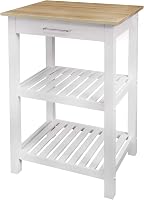
A compact surface can make sense when your main goal is prep space rather than seating. The Casual Home Sunrise Small Island measures about 23 in wide and 20 in deep, with a 36.5 in height, a drawer, and 2 lower shelves.
This stationary island may suit a spot where you can keep it in place without interrupting the route through the kitchen. Check the dimensions against your taped outline, including the room needed to reach its drawer and shelves.
When is a rolling island a better choice?
Choose a rolling cart if you need extra work space but want the option to move it. It only helps if you have a place to park it and can roll it through the kitchen without hitting cabinets or blocking traffic.
The Finnhomy 3-Tier Oak Top Cart measures 18 in deep, 36 in wide, and 35.4 in high, excluding its handle. It has 4 in wheels, a pull-out shelf, and 3 tiers of storage.
Measure the path to its parking place and leave room for the handle when checking its footprint. Finnhomy says 2 of its wheels have brakes; use them when you want the cart to stay in place.
A cart is a poor fit if you have nowhere to park it, or if moving it takes more effort than the extra surface saves. If a cart tends to shift during use, see how to keep a rolling kitchen island from moving.
Will seating make the island worthwhile?
Seating is useful when you have room for people and stools without narrowing the main walkway. Measure the area a seated person and pulled-out stool will occupy, not just the island's top.
If you need seating for more than one person, compare the footprint with small kitchen islands with seating and consider whether stools can tuck away. A dining set with a drop leaf may suit a kitchen where meal space matters more than extra prep space.
The Winsome Suzanne Set with Stools measures about 29.6 in wide, 29.1 in deep, and 32.75 in high. It has a drop leaf, 2 stools that tuck under the table, 2 drawers, and rolling casters.
This set is closer to a compact dining table than a narrow prep island. Check its open footprint before choosing it, especially if the table would sit near a doorway or a frequently used appliance.
What trade-offs should you weigh before buying?
Compare the space you give up with the task the island makes easier. A fixed top can stay ready for prep, while a movable cart or drop leaf can be shifted or reduced when you need more room.
Consider these points:
- Prep space: Will you use the added surface most days?
- Storage: Do shelves or drawers replace clutter elsewhere, or add more places to store things?
- Movement: Can people pass and open nearby appliances with the island in place?
- Seating: Does it support how you eat, without making stools obstacles?
- Flexibility: Can you move or fold it when the kitchen needs open floor space?
An island that performs one clear job may be a better use of space than a larger piece with features you rarely need. For measurements and options, start with the complete kitchen islands with seating guide if seating is part of your plan.
How should you decide if a kitchen island is worth it?
A kitchen island is worth considering when its main job is clear, its footprint fits, and the space around it remains easy to use. Mark the footprint and test the route before choosing between a stationary island, rolling cart, or drop-leaf table.
Choose the Casual Home Sunrise Small Island for a compact stationary surface with storage. Choose the Finnhomy cart if mobility and a longer worktop fit your routine, or the Winsome set if dining and tuck-away stools matter most.
If the taped outline crowds the kitchen, skip the island or look for a smaller alternative. If it leaves comfortable routes, compare the small kitchen island with seating options against your measurements.
Kitchen island fit depends on your room layout; measure the available floor space and check appliance access before choosing.
Frequently asked questions
Is a kitchen island worth it in a small kitchen?
It can be, if you gain a useful prep surface or storage and still have comfortable routes through the kitchen. Measure the island, nearby doors, drawers, and appliances, then mark its footprint on the floor.
If the marked space feels cramped, try a narrower or movable option.
How much space should be around a kitchen island?
There is no single clearance that fits every kitchen, because appliance doors, traffic, and the people using the room affect the layout. Measure the aisle between the island and counters, then check that you can open drawers and appliances and pass without turning sideways.
Are rolling kitchen islands good for small kitchens?
A rolling island can help when you need work space sometimes and an open route at other times. Check its footprint, wheel locks, and the path it must travel.
A cart that stays in the way when parked may not solve a small kitchen's space problem.
Is a kitchen island better than a breakfast bar?
An island adds a freestanding work surface and may provide storage, while a breakfast bar can use a counter or wall edge with less floor space. Compare the available footprint, seating needs, and prep space before deciding which one fits your daily routine.